
flyjev · vision · September 30, 2026
A test a child passes, and the model didn't
121 photos, one yes/no question: is there anything yellow in there? We picked the simplest task in vision precisely because, when it fails, you can't blame the domain. What's left is the model — or the question.
Why yellow
Almost every vision test mixes two difficulties: seeing and knowing. A medical report, an invoice, a defective part — a miss there can be a reading failure or a lack of domain knowledge, and you can't tell the two apart.
Color doesn't have that problem. Anyone labels it in a second, with no training and no context. So every error belongs to the system, and you can chase the cause without arguing about the ground truth.
Where the photos come from
Wikimedia Commons, labeled by hand. Ambiguous ones were discarded before any measurement — if two people would disagree, the photo is out. What remained is 121 photos in four groups:

Obvious yellow, filling a good part of the frame.
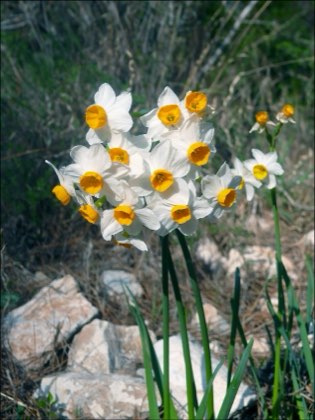
Yellow is present, but small. Tests whether the model looks at the whole frame.

No yellow, and nothing that looks like it.
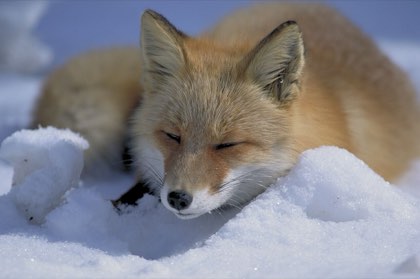
Yellow's neighborhood: orange, amber, gold, caramel, cream, brown, greenish-yellow.
The no_hard group is the real test. Fox, orange cat, tangerine, carrot, sand dune, salmon — things a human would never call yellow, but that live next door.
36 more multi-photo sets
Besides the 121 single photos, 36 calls send 2, 3 or 4 photos at once, with the yellow one in every possible position, plus sets with no yellow at all. This measures one specific thing: whether the photo's position in the call changes the answer. In total, 157 calls per round.
What happened
The first round went badly: 87 out of 121. And the error pattern was clear — the model got all 44 obvious-yellow photos right and missed 21 of the 29 in the no_hard group. In other words: it wasn't blind. It was calling orange yellow.
The question we were asking was this, in full:
Is there anything yellow in the image(s)
Read that way, the error stops being the model's. "Yellow" has no declared boundary. A fox is orange-yellowish; if nobody said where yellow ends, answering "yes" is defensible. The ground truth carried a rule in the labeler's head that the question never communicated.
So we added the boundary to the prompt — 43 tokens — and ran again, on the same machine, with the same model and the same photos. The result was 119 out of 121.
What this is, and what it isn't.
It is not a prompt trick to inflate a number. It is the recognition that the specification was in the ground truth and not in the question. As long as that holds, the benchmark doesn't measure the model: it measures whoever guesses the labeler's convention. The next two pages show the measured result and the same photo answered both ways.